Saily's US Phone Number: A Second Line for SMS 2FA, Privacy, and US-Only Apps
The standard travel setup is still the right default for most trips: keep your home line active for calls and SMS, put a travel eSIM on data, and turn off data roaming on the primary SIM. That combination covers maps, messaging, and — as long as your home carrier behaves abroad — your banking codes.
It does not cover every situation. If you travel for long stretches, cross several countries in a row, or rely on US-based apps that want a US number, the “keep the home line running” approach starts to show cracks. Roaming rules change between countries, some carriers throttle or block SMS while you’re abroad, and handing your real number to every delivery app and hotel booking creates spam and privacy noise.
In June 2026, Saily (the eSIM app from the team behind NordVPN) added a real US phone number you can buy inside the same app as its data plans. It is not a replacement for a local SIM, and it is not for everyone. But it closes a specific gap that the standard setup leaves open. Here’s what it actually does, where it helps, and where it falls short.
What Saily’s US number is
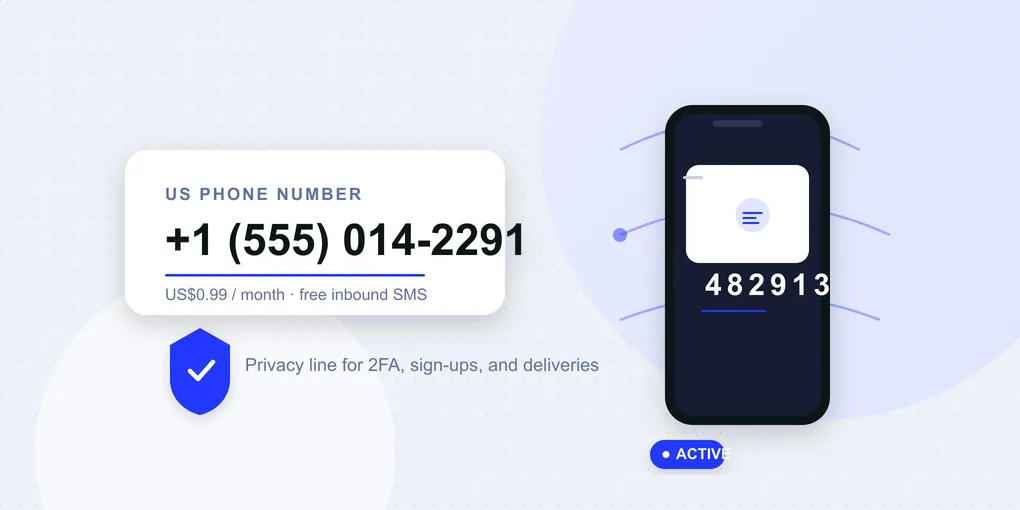
You subscribe to a US (+1) mobile number through the Saily app for $0.99/month. The number stays the same as long as the subscription stays active, and it is tied to your Saily account rather than to a specific phone — log in on a new device and it follows you. Identity verification (a passport or government ID) is required after purchase.
The core value is inbound: incoming SMS is unlimited and does not require an extra plan. That is what makes it useful for one-time codes, bank alerts, and delivery updates. If you also want to send texts or make calls, you buy separate add-on plans starting at $0.99. A few details worth knowing before you commit:
- Minutes and messages are shared between incoming and outgoing traffic — an answered spam call still burns your allowance.
- Outgoing calls only reach numbers inside the coverage area of the plan you pick. A US plan calls US numbers; a Global plan works from any supported destination. International calls are not supported.
- It is a real cellular number, not a VoIP line. That matters for verification, because some services reject VoIP numbers outright.
- Callers outside the US who dial your +1 number may be charged international rates by their own carrier.
You run it as a second line on an eSIM-compatible phone (most recent iPhones and Androids), alongside your Saily data plan or any other eSIM. Everything is managed in one app.
Where it helps most
SMS 2FA without relying on your home carrier. Many banks, payment apps, and account services still default to SMS codes. If you’d rather not leave your home line on, or your carrier makes SMS unreliable abroad, a persistent US number can receive those codes from almost anywhere. Saily’s own material calls out Venmo and Ticketmaster as apps that want a US number; in practice, whether a specific service accepts a secondary number varies. Some platforms are strict, so test with a low-stakes account before moving anything critical onto it.
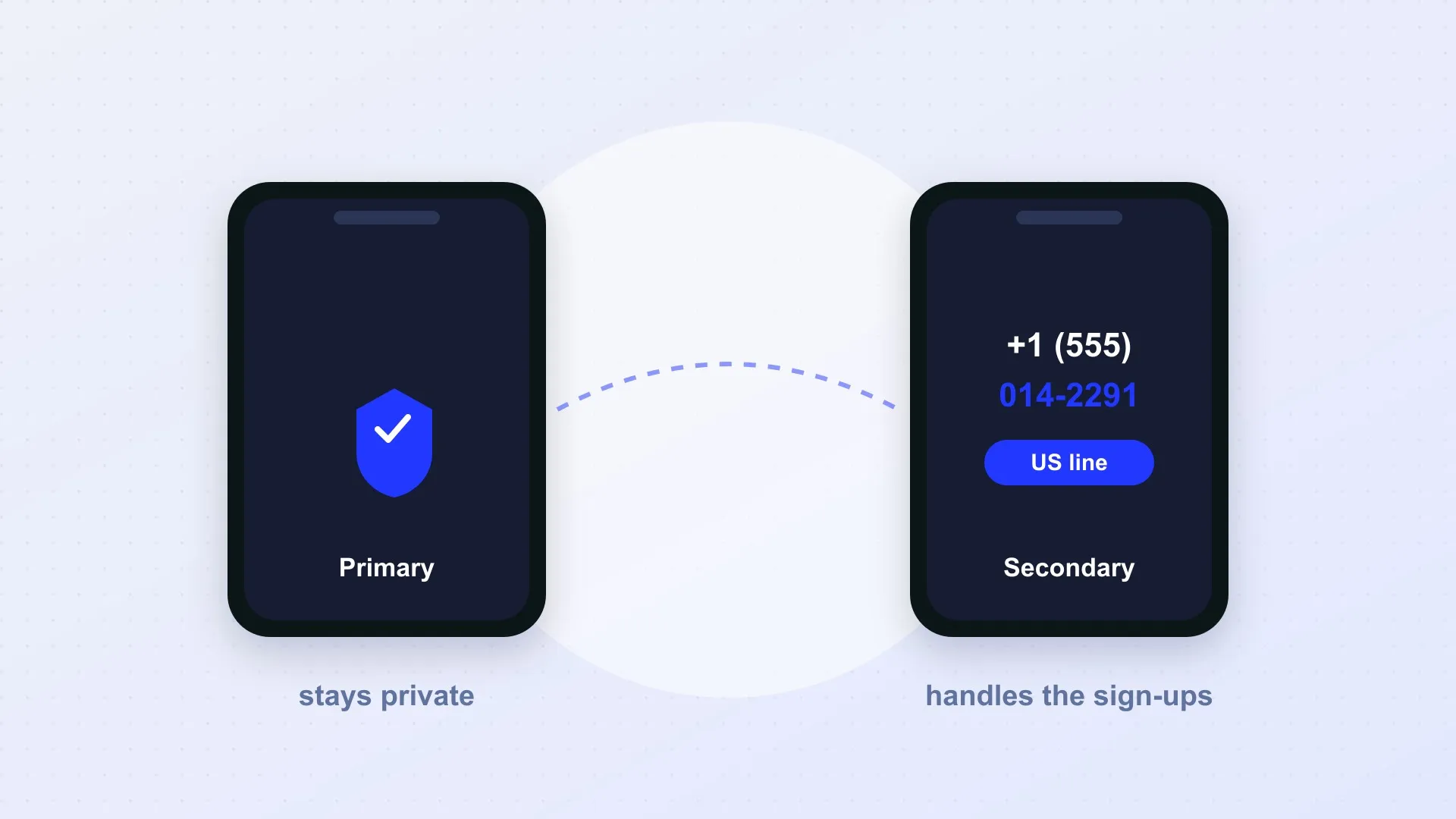
Privacy as a secondary line. Use the Saily number for registrations, delivery updates, hotel confirmations, and apps you don’t fully trust. Your primary number stays cleaner. At $0.99/month it is cheap enough to keep long-term, which is why it appeals to digital nomads who want a stable public-facing line without exposing their main one.
US-centric services while abroad. Venmo, Ticketmaster, certain banking and fintech apps, and some US-only platforms still prefer or require a US number. A +1 number that travels with you removes a recurring friction point, whether you’re visiting the US or managing US accounts from another country.
The honest limitations
- No MMS. Picture messages and some group texts will fail.
- No premium-rate or short-code SMS/calls. Some marketing and two-factor services use these and will not reach you.
- No call forwarding in either direction.
- Outgoing calls are local only — limited to the region covered by your active call plan.
- Incoming and outgoing share the same minutes, so casual answering burns call credit.
- Callers outside the US may pay international rates to reach you.
- It is still a fresh US number. Some services treat recently issued numbers differently than long-established local lines, and acceptance is not guaranteed for every app.
- It is a US number. It does not give you a local number in the country you’re visiting, and it is not a substitute for a local SIM if you need to receive calls from local delivery drivers or verify identity with a destination-country service.
Treat it as a supporting line, not a primary number. It is built for SMS, verification, and the occasional local call — not for heavy voice use or as your only connection.
How it compares to the alternatives
| Option | Best for | Watch out |
|---|---|---|
| Home line + data eSIM (default) | Short trips, one or two countries, reliable home carrier | Roaming SMS rules vary; can’t hide your real number |
| Saily US number + data plan | Long stays, multi-country, US app access, privacy | No MMS/short codes/forwarding; US number only |
| Local SIM | You need a local number for local services and calls | New number per trip; no US-number benefits |
| VoIP/second-number apps | Cheap secondary line without hardware | Some services reject VoIP numbers for 2FA |
Who should consider it
- Frequent travelers or digital nomads who already use Saily for data and want the number handled in the same app.
- Anyone who keeps hitting SMS 2FA walls with US-linked accounts while abroad.
- Travelers who want a low-commitment secondary line for privacy without paying for a full virtual-number service or a local SIM every trip.
If your trips are short, your home carrier handles SMS cleanly abroad, and you mostly live in WhatsApp and Signal, you can skip it. The default setup from our travel eSIM and 2FA guide remains the right starting point for most people.
How to set it up
- Download the Saily app and get a data plan for your destination if you don’t have one.
- From the phone-numbers section, subscribe to a US number ($0.99/month).
- Complete identity verification with a passport or government ID.
- Add a call/text plan only if you’ll actually send messages or make calls.
- Install the eSIM on your phone and keep the Saily line set for SMS while your main line stays for everything you don’t want to share.
Check the current pricing, plan coverage, and the full list of supported devices inside the Saily app before committing. Prices and rules change, and our numbers here are current as of August 2026.
Bottom line
Saily didn’t reinvent the phone. It added an inexpensive US number that stays put and does the two things travelers most often need from a second line: receiving verification codes and keeping a real number out of their primary inbox. It is a narrow solution with real limits — no MMS, no short codes, local-call-only plans — but for the people who keep running into SMS and privacy friction abroad, it is one of the cleaner options available.
Treat it as a complement to, not a replacement for, a solid travel data plan. Compare it against keeping your home line active and a local SIM based on your actual route before buying.
Disclosure: The Saily links in this article are affiliate links. We may earn a commission if you buy through them, at no extra cost to you.
Information current as of August 5, 2026. Provider plans, pricing, and supported apps change frequently. Always verify current details on the official Saily pages before purchasing.